509TH FIGHTER SQUADRON
The Ships
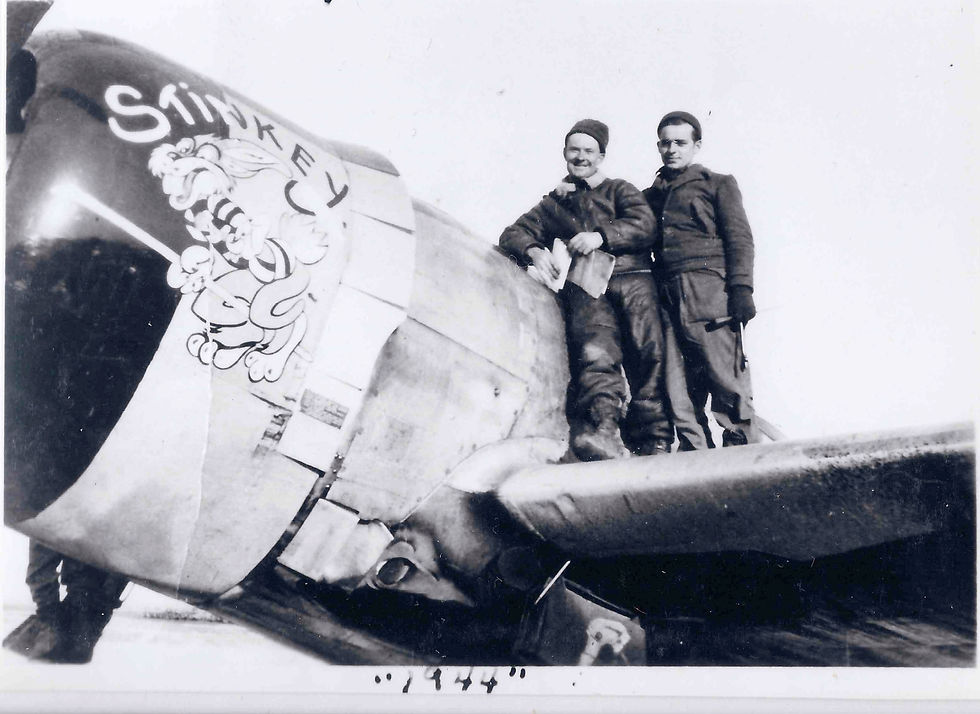
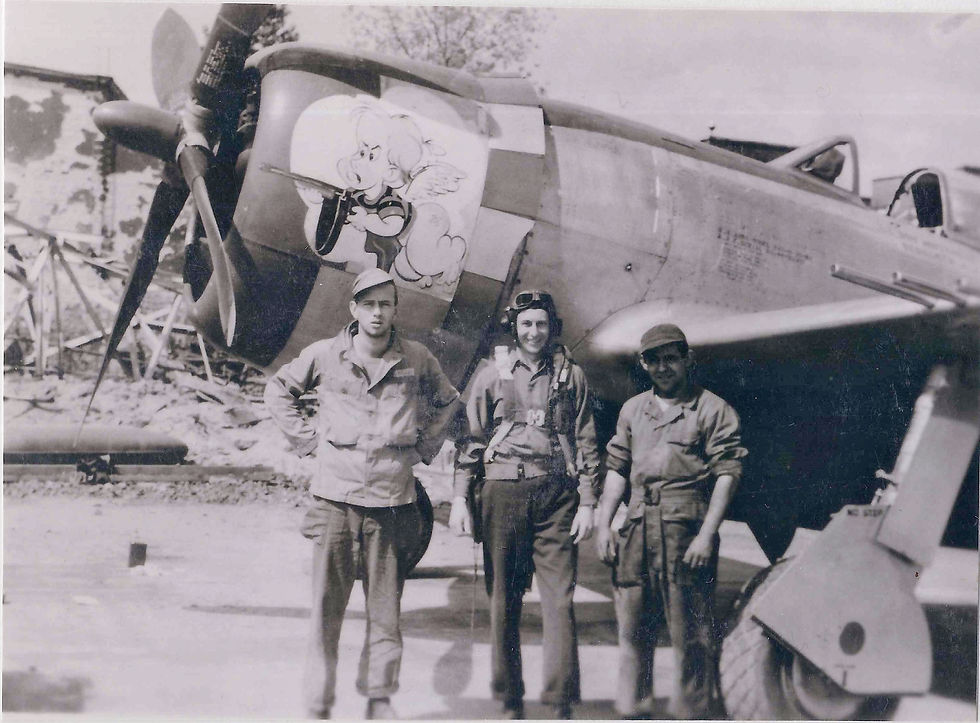
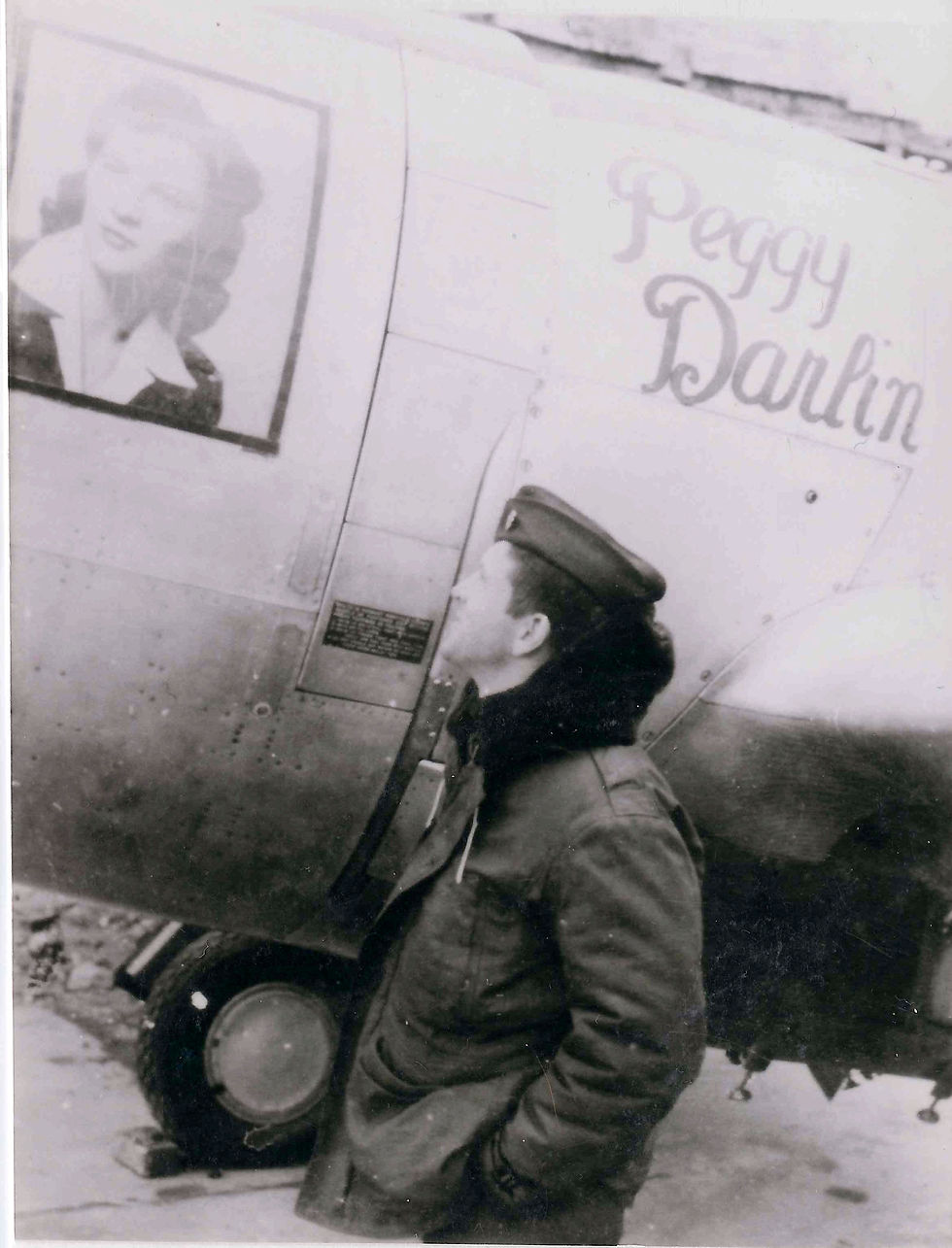
The aircraft of the 509th Fighter Squadron

The P-47 Thunderbolt
The P-47 Thunderbolt was developed by Republic Aviation and first flew on 6 May 1941. It was affectionally dubbed the “Jug” due to its jug-like appearance by pilots. The majority of Fighter Bomber Groups within the 9th Air Force flew P-47 Thunderbolts. While the Jug certainly wouldn’t win any beauty contests, it was held in high regard by the pilots of the 9th Air Force Fighter Bomber Groups. It was a rugged airframe that proved to be well suited for the job of ground attack. Thunderbolts could take plenty of punishment from enemy fire and still bring their pilot home safe.
Early models of the P-47 B, C, and D type aircraft were characterized by their Razorback fuselage that formed a sharp peak atop the aircraft— running from behind the pilot’s compartment and sloping down towards the tail. The development of the P-47D-25 model introduced the bubble canopy that improved pilots’ visibility and removed the Razorback ridge that ran atop the fuselage. The D model was the most widely produced Thunderbolt, with 6,315 total produced during World War II. The bubbletop models from D-25 onward had a gross weight of around 14,500 pounds and a max speed of 435 miles per hour at 30,000 feet.
Despite a price tag over $30,000 more expensive than any other single-engine fighter aircraft of World War II, more than 15,500 P-47 Thunderbolts—the largest amount of any American fighter aircraft in World War II—were built. This serves as a testament to the P-47 Thunderbolt’s operational capabilities demonstrated during World War II.
Maj. Michael A. Titre of the 509th Fighter Squadron jokingly quipped while speaking to the record of the Thunderbolt,
“If you’re headed to an air show, bring a P-51. If you’re headed to war, bring a P-47.”
Squadron Aircraft